
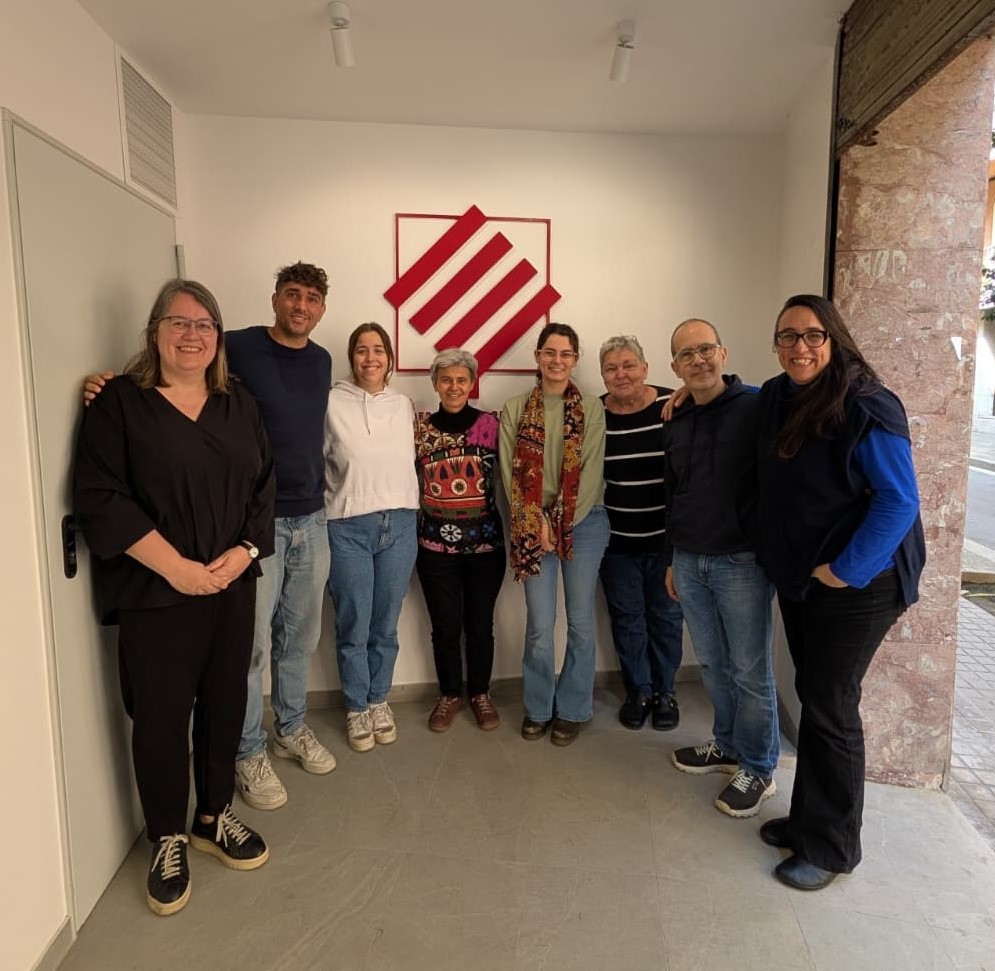
On 23 March 2026, researchers from the Universitat Autònoma de Barcelona (UAB), in collaboration with the Federació de Persones Sordes de Catalunya (FESOCA), organised a focus group with Deaf participants to gather community perspectives on accessibility in telecommunications and media services.
Held at FESOCA’s headquarters in Barcelona, the session aimed to collect feedback and recommendations that will contribute to the development of a future standardised telecommunications document being prepared in collaboration with Swiss Television and Televisió de Catalunya.
The discussion covered a range of accessibility-related topics, including:
- Positioning of sign language interpreter windows on screen
- The influence of interpreter role and presentation in communication
- How interpreter appearance may affect sign language perception
- Combining sign language interpretation with subtitles and other visual information
- Accessibility during music or prolonged silent scenes
- The possible use of avatars in sign language accessibility services
Representing UAB at the session were Anna Matamala, Pilar Orero, and Aida Villaécija. Participants from FESOCA included President Albert R. Casellas, Éric Alcantara, Deaf participants Pepita Cedillo and Berta Viñas, and Marta Bosch.
The session generated valuable insights from Deaf participants, whose contributions will help inform recommendations to be presented at the United Nations headquarters in Geneva in July 2026.
This activity reflects ALFIE’s commitment to inclusive and participatory research, ensuring that the voices of end users remain central in the development of ethical, accessible, and user-informed AI and communication technologies.
See original news (also available in Catalan Sign Language – LSC)