Opening the “Black Box”: Why Explainable AI Matters for Trustworthy AI
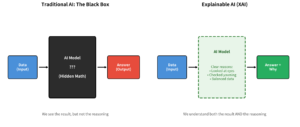
Diagram comparing traditional AI and Explainable AI, source author’s own. By Stamatis Samaras, CERTH. Artificial Intelligence (AI) is quietly making decisions around us every day, recommending what we watch, filtering spam from our inboxes, and even helping doctors spot early signs of disease. Yet for most people, how an AI arrives at a specific conclusion remains a complete mystery. In the tech world, this is known as the “black box” problem: data goes in, an answer comes out, and the reasoning in between is hidden behind millions of complex calculations. When AI is simply suggesting a movie, a little mystery doesn’t hurt. But when AI
ALFIE’s Journey Continues in Eindhoven
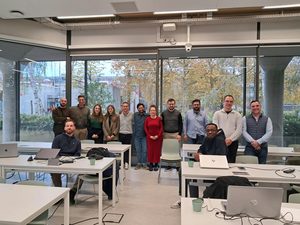
Group photo of ALFIE General Assembly in University of Eindhoven. 2–3 November 2026 | 4th ALFIE General Assembly | Eindhoven, Netherlands The 4th ALFIE General Assembly brought project partners together in Eindhoven for two days of research, discussions, and collaborative planning. Hosted by Eindhoven University of Technology (TU/e), the meeting offered an opportunity to review the project’s progress, share recent findings, and discuss the next steps in developing the ALFIE AutoML platform. Research was an important part of the meeting, with partners sharing published studies and ongoing work across different areas of AI. From adapting machine learning models to changing data and improving explainability, to
EU AI Act implementation: ‘the Digital Omnibus arrives’
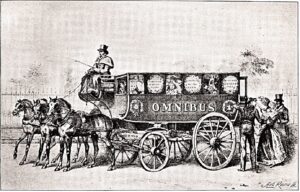
By Philip Haynes. Emeritus Professor of Public Policy, University of Brighton. Research Fellow, ALFIE. The EU’s Digital Omnibus is the first major revision to the implementation of the EU AI Act. Introduced in 2026, it delays some compliance requirements, simplifies obligations for smaller organisations, and expands restrictions on harmful AI uses such as non-consensual intimate deepfakes and AI-generated child sexual abuse material. The changes reflect growing political debate about how Europe should balance AI innovation, business competitiveness and public protection. Image: “Shillibeer’s first omnibus” (1902) via Wikimedia Commons (Public Domain). The reforms illustrate a shift in EU priorities. While the original AI Act focused heavily

Building the ALFIE AutoML Engine: Making AI Accessible and Responsible
Max Gruber / https://betterimagesofai.org / https://creativecommons.org/licenses/by/4.0/ By Subhaditya Mukherjee, University of Eindhoven. If you enjoyed the read, feel free to send us a message here, or send me an email if you want to have a chat. After all, this is part of an EU project, and collaboration is always welcome. The ALFIE AutoML Engine was developed as part of the ALFIE project, a European initiative focused on making AI more accessible while accounting for its legal, ethical, and explainability requirements. The goal is not simply to help users train machine learning models, but to make it easier for them to explore ideas, evaluate potential
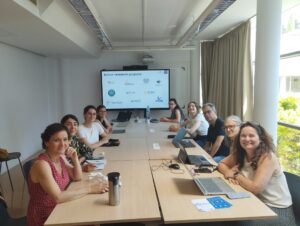
ALFIE team visits the Computer Vision Centre in Universitat Autònoma de Barcelona
Photo 1: Representatives from ALFIE and Transmedia Catalonia visiting the Computer Vision Centre at Universitat Autònoma de Barcelona. On the 17th of June 2026, representatives from the ALFIE project visited the Computer Vision Centre (CVC) at the Universitat Autònoma de Barcelona. The goal of this visit was to exchange insights, explore technical synergies, and future collaborations in the evolving landscape of artificial intelligence. Exploring cross-disciplinary synergies The CVC is a prominent institution recognised for its research and technology transfer in computer vision and artificial intelligence. During the visit, discussions focused on aligning the ALFIE project’s objectives with the CVC’s core research lines, specifically focusing
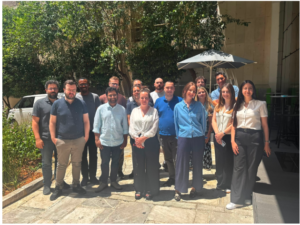
Shaping the Future of AI in Europe: ALFIE completes its first EU Review and 3rd GA Meeting
On June 11-12, 2026, the ALFIE project reached a major milestone, wrapping up its first official review and 3rd GA meeting with representatives from the European Commission. The meeting was a dynamic, hybrid event. While our EU reviewers dialed in online, ALFIE partners gathered face-to-face in the city of Athens, Greece, blending collaboration with virtual teamwork. During the first reporting period, the consortium progressed the development of the AutoML platform and the ETD-Hub, while simultaneously considering ethical concerns of AI development and deployment, user requirements, and communication and dissemination activities. These achievements formed the basis of the review discussions. Diving into the details: What was