Bridging Innovation and Ethics: Highlights from the Recent ALFIE Advisory Board Meeting
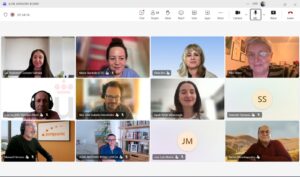
The ALFIE project recently hosted its Advisory Board meeting on Monday, the 20th of April, marking an important moment for our development team. Bringing together experts, researchers, and project partners, this session provided an invaluable platform to evaluate our progress on the ETD-Hub and AutoML interfaces. As we work toward making our tools both powerful and accessible, the insights gathered from our board members have helped refine our roadmap and sharpen our focus on real-world impact. Shaping the ETD-Hub A significant portion of our discussion centered on the ETD-Hub, our platform for knowledge sharing and expert collaboration. Key takeaways included: Advancing AutoML Capabilities The demonstration
ALFIE Engages Deaf Community in UAB Focus Group on Accessible Telecommunications Standards
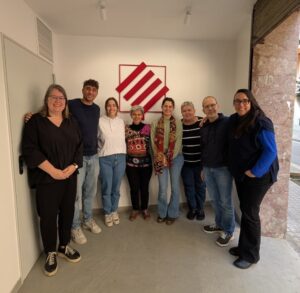
On 23 March 2026, researchers from the Universitat Autònoma de Barcelona (UAB), in collaboration with the Federació de Persones Sordes de Catalunya (FESOCA), organised a focus group with Deaf participants to gather community perspectives on accessibility in telecommunications and media services. Held at FESOCA’s headquarters in Barcelona, the session aimed to collect feedback and recommendations that will contribute to the development of a future standardised telecommunications document being prepared in collaboration with Swiss Television and Televisió de Catalunya. The discussion covered a range of accessibility-related topics, including: Representing UAB at the session were Anna Matamala, Pilar Orero, and Aida Villaécija. Participants from FESOCA included President
HORIZON-CL2-2024-TRANSFORMATIONS-01-06 CLUSTERING MEETING
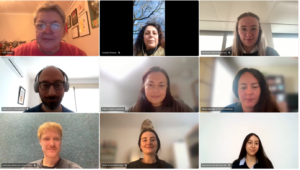
On February 11th, 2026, three funded projects from the Call HORIZON-CL2-2024-TRANSFORMATIONS-01-06 met with ALFIE online to organise an event for the Global Awareness Accessibility Day 2026 (GAAD2026). On Thursday, May 21, 2026, ΑLFIE will participate in the 15th Global Accessibility Awareness Day (GAAD). The objective of GAAD is to raise awareness of access and inclusion for the more than one billion people with disabilities. During the meeting partners from AI4POL, SPICE, ALFIE and FORSEE discussed the topic of the event and how to shape the agenda according to the three project objectives, commonalities, and complementarities. As outcome of the meeting, the participants decided to draft
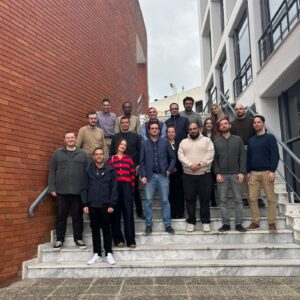
Day One and Two: ALFIE 2nd General Assembly in Thessaloniki, Greece
The ALFIE consortium held its second General Assembly on November 6 and 7 in Thessaloniki, Greece. The meeting focused on project developments, including the current progress of the ETD Hub, AutoML, and the different use cases. Partners reviewed technical updates and shared insights on ongoing work across all project components. A key part of the discussions centered on aligning the project with ethical and trustworthy AI practices, ensuring compliance with the EU AI Act and GDPR. The General Assembly was an opportunity to strengthen collaboration and set the course for ALFIE’s next steps. Follow us for upcoming results and project news in our social media:
ALFIE Workshop on Ethics in Thessaloniki, Greece
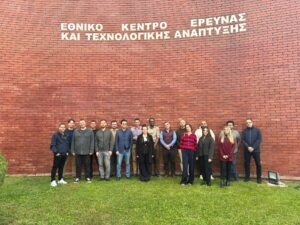
Consortium members outside the National Centre for Research and Technology Development (CERTH) during the ALFIE events in Thessaloniki. Day One: ALFIE Workshop on Ethics On the 6th of November, ALFIE held a hybrid workshop on AI ethics and data management at Certh headquarters in Thessaloniki, Greece. Experts from DBC, University of Brighton, and Kinit presented about the current EU regulatory landscape including information about the AI Act and GDPR, data management and data protection protocols. Experts discussed the ethical dimensions of the ALFIE use cases, specifically their level of risk in relation to the European AI Act. We also classified the level of risk for

MA Dissertation on Biases in Automatic Speech Recognition
We are delighted to share the findings of Biases in Automatic Speech Recognition: Accessibility and Inclusion Barriers in Speech-to-Text Systems, the MA thesis defended by Arunachala Luca de Tena. Inspired by the UAB use case in ALFIE, this research explores how speech-to-text systems can create accessibility barriers that affect the digital inclusion of certain user groups. The study is framed within the European legal framework and the UN Sustainable Development Cooperation principle of “leaving no one behind.” Using a qualitative approach, three representative systems (WhatsApp, Apple, and OpenAI) were examined, alongside a literature review of key bias factors such as accent, age, language, background noise,