
By Reyhaneh Sohrabi, PhD candidate, UAB.
What happens when an NLP scientist, an architect, a physician, a geneticist and a machine-learning engineer examine the same AI system?
They often notice completely different risks, and that was one of the most valuable aspects of the Data Science and Artificial Intelligence for Social Welfare Challenge, held in San Lorenzo de El Escorial.
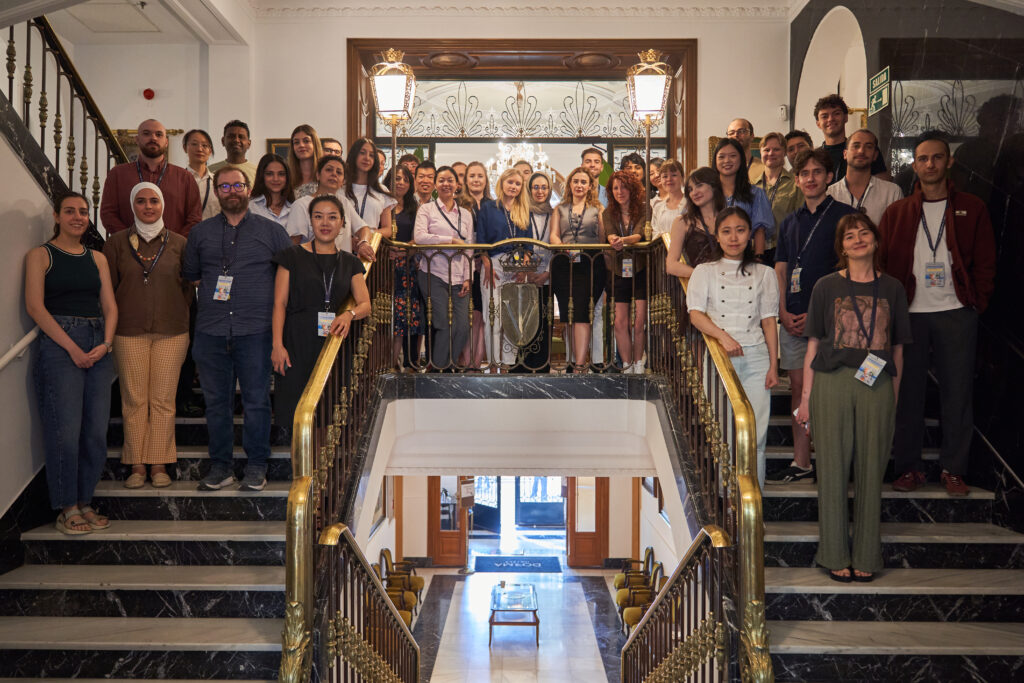
The course brought together doctoral researchers and early-career professionals from different universities, countries and academic backgrounds. I (Reyhaneh Sohrabi) attended as an NLP scientist alongside Azadeh Shojaei, an architect specialising in urban design from UAB.
Our fields approach technology from different perspectives. I study language, speech and the behavior of AI systems, while Azadeh focuses on how people interact with cities, spaces and the built environment. During the course, these differences became a strength rather than a barrier.
The programme was based on an important idea: the ethical challenges of AI cannot be understood from a technical perspective alone.
An AI system may achieve strong performance scores while still excluding certain users, reinforcing existing inequalities or creating unintended harm in real-world settings. Identifying these risks requires expertise not only in algorithms, but also in healthcare, architecture, genetics, social sciences and many other fields.
Throughout the course, we explored the AI lifecycle, from data collection and model training to evaluation and deployment. We discussed how bias can enter a system, how AI behaves in real-world use cases, and what should be done when a system does not treat everyone fairly.
The interdisciplinary group discussions were particularly valuable. A machine-learning engineer might focus on model accuracy, while a physician might identify risks to patient safety. An architect might question whether a system is accessible within a particular environment, while a social scientist might notice how certain communities are overlooked. These different perspectives helped reveal problems that might remain invisible within a single discipline.
Who does it work for?
Who might it exclude?
What happens when it fails?
The discussions showed that unfair AI does not always result from an obviously discriminatory decision. It can emerge from incomplete datasets, narrow design assumptions, inaccessible interfaces or evaluation methods that hide unequal performance.
This experience was also closely connected to the goals of the ALFIE project, which examines how AI can be made more inclusive, accessible and accountable across different users and contexts. For ALFIE, interdisciplinary feedback is essential because fairness cannot be assessed only through technical metrics. It also depends on how people from different backgrounds experience, interpret and are affected by AI systems.
The course therefore offered a valuable opportunity to explore ideas central to ALFIE in practice, including through hands-on engagement with the ALFIE platform by bringing diverse perspectives into the evaluation process, identifying risks that technical teams may overlook, and examining how AI systems behave when moved from controlled settings into real-world environments.
For Azadeh and me, the course demonstrated why meaningful AI ethics depends on interdisciplinary collaboration. Bringing people from different fields into the same conversation makes it easier to challenge assumptions, identify overlooked risks and understand the broader consequences of technological decisions.
San Lorenzo de El Escorial also provided a memorable setting for the experience. The historic city, its mountain landscape and the diversity of the participants created an environment where conversations continued beyond the formal sessions.
The course was not only an opportunity for us to learn how AI systems are trained, tested and applied. It was also a reminder that responsible AI cannot be built by technical experts alone.