At this year’s European Researchers’ Night, our team had the opportunity to present key insights from the ALFIE Project, focusing on our ongoing work to build frameworks for equitable and trustworthy artificial intelligence.
A central highlight of the presentation was researcher Reyhaneh’s discussion on how we can operationalise fairness in AI design.
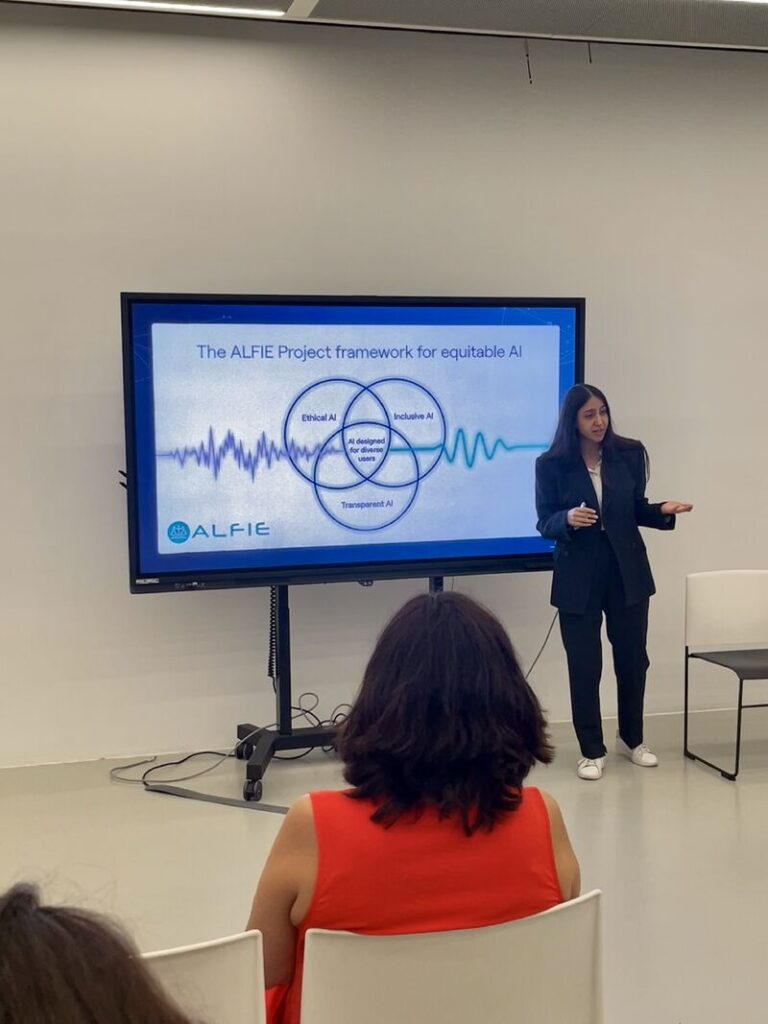
The ALFIE Framework for Equitable AI
At the heart of the ALFIE project is the recognition that AI systems must be designed for diverse user bases from the ground up. The framework brings together three core pillars:
Ethical AI: Ensuring algorithmic governance respects human rights, fairness, and safety.
Inclusive AI: Designing interfaces and models that accommodate accessibility requirements across varied user populations.
Transparent AI: Establishing clear, explainable mechanisms so users understand how automated decisions are made.
When these three dimensions overlap, we achieve AI designed for diverse users—moving beyond theoretical ethics into practical implementation.
Moving from Theory to Application
Participating in public outreach events like Researchers’ Night allows us to share our research beyond academic circles and engage directly with the public on how ethical AI frameworks are built. As automated systems continue to integrate into daily services, establishing robust, human-centered evaluation standards remains essential.